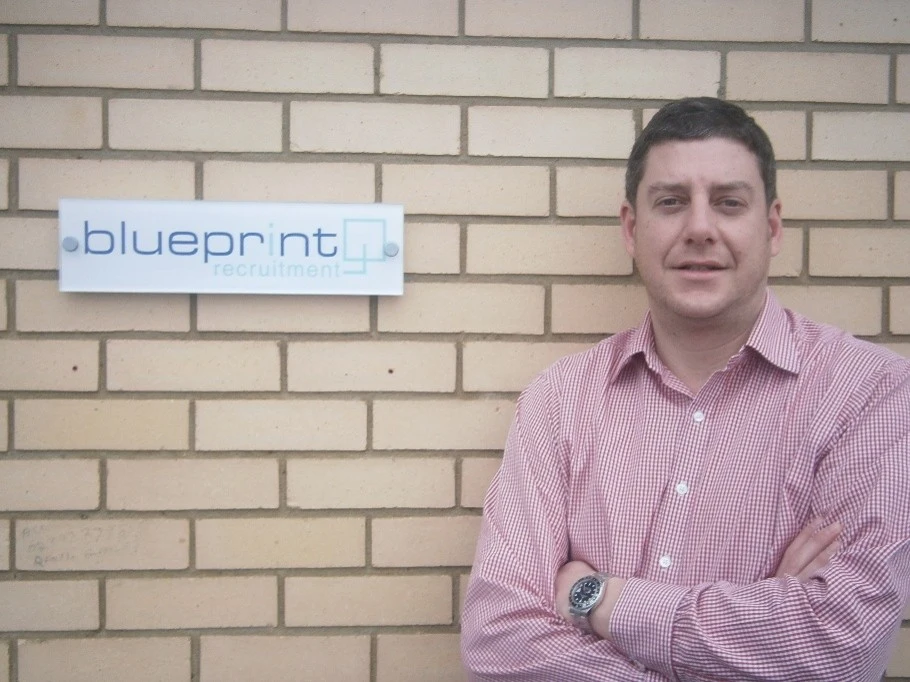
Twenty years later,
Blueprint Recruitment Solutions has grown into an established specialist
recruitment business, built around long-standing relationships, specialist
market knowledge and a team that has grown alongside it.
As part of our 20
for 20 series, we sat down with Founder and Managing Director Mark and
Director of Sales Luke to look back at where Blueprint began, the decisions
that shaped the company and what two decades in business have taught them.
Where it all began
When Mark founded
Blueprint in 2006, he saw an opportunity to do recruitment differently: to
offer clients a more personal, tailored service built around genuine
relationships rather than simply filling a vacancy and moving on.
The beginnings were
modest. Blueprint started in a small space in Gosport, offered to Mark for free
by a friend.
“It was me, a laptop
and a telephone, and that is how the company started.”
The first six months
brought plenty of uncertainty. Mark had a mortgage to pay, little money coming
in and no guarantee the idea would work. But relationships began to build, the
business gained momentum and, two years later, it was time to bring someone
else on board.
That person was Luke, although
recruitment had never been part of his plan.
From behind the bar to Blueprint
Mark first got to know
Luke while he was working behind the bar at his local pub.
What stood out was his
work ethic. When the pub was quiet, Luke would clean glasses, clear tables or
find something else that needed doing while others stood around.
Mark saw something
that could translate into recruitment.
“The work ethic I had seen in Luke
at the pub was exactly what we needed to springboard the business.”
Luke had trained as a
teacher before deciding it was not for him and spending two years travelling.
When Mark approached him about an opportunity, he knew very little about
recruitment.
They met at
Blueprint’s small office in Gosport. Luke remembers it as less of a formal
interview and more of a conversation about what the opportunity could become.
He took the chance and
joined Blueprint in July 2008.
It was Luke’s first
office job. He did not drive, so his mum would drop him at work in the mornings,
and Mark would often give him a lift home.
Neither could have
known quite where that decision would lead.
Building the Blueprint team
The early culture was
straightforward: work hard, be available and build relationships.
Mark and Luke
regularly started early and worked into the evening, knowing that a young
business competing with established agencies had to earn its place in the
market.
That mentality became
part of Blueprint’s foundations.
As the company grew,
so did the team. Rebecca joined in 2009, followed by Rob in 2010 and Scott in
2012, forming the early core of the leadership team that would help shape
Blueprint over the years that followed.
The business itself
was evolving too. Mark and Luke had initially managed both client and candidate
relationships, but as more people joined, Blueprint began developing the
specialist structure it is known for today.
Consultants could
focus on developing client relationships while specialist recruiters
concentrated on the candidate market. Rebecca played a pivotal role in
developing the candidate-focused side of the business, while the team gradually
expanded beyond its Building Services foundations into new specialist markets.
None of it happened
overnight. Blueprint’s growth came from years of building reputations,
recognising opportunities and investing in people.
Growing through challenging markets
Blueprint was still a
young business when the 2008 financial crisis hit.
Rather than retreat,
the company continued strengthening its client relationships and investing in
its team. Blueprint performed strongly during the recession, something Mark
attributes to work ethic, operating in resilient markets, taking calculated risks
and having clients who trusted the business.
It established an
approach that would prove important throughout Blueprint’s history: difficult
markets could also be an opportunity to strengthen relationships.
By the middle of the
following decade, years of consistent work were beginning to show.
Luke identifies 2015
as a turning point, followed by sustained growth between 2016 and 2019. For
Mark, 2018 and 2019 stand out as the years when Blueprint truly felt
established.
Major organisations
knew the Blueprint name, clients were returning with repeat business, and the
company was increasingly recognised within its specialist markets.
Then came 2020.
A defining decision during COVID
COVID-19 brought
enormous uncertainty to businesses across the UK, and recruitment was no
exception.
Blueprint made a
deliberate decision: no one would be furloughed.
There was a business
case for remaining active, but for Mark, it was also about responsibility to
the team.
Keeping people working
provided routine, connection and financial stability during an incredibly
uncertain period. It also meant Blueprint could continue supporting the clients
and candidates with whom it had spent years building relationships.
Luke remembers
consultants spending 30 or 45 minutes speaking to candidates who were isolated
at home, sometimes simply having a conversation.
Recruitment, after
all, is about relationships.
Blueprint did not want
to disappear when the market became difficult and return only when business
picked up again. The team remained present, continued those conversations and
maintained the relationships it had worked so hard to build.
Blueprint ultimately
emerged from COVID as a larger business than it had been going into it, with
its team intact and many relationships strengthened.
Keeping the culture as the company
grows
The Blueprint of today
naturally looks very different from the company Mark started in 2006.
But some of its
traditions can be traced back surprisingly far.
In the early years,
Mark and Luke would celebrate a hard quarter with a few drinks. As the company
grew, those celebrations evolved into Blueprint’s end-of-quarter events,
alongside summer events, Christmas parties and a wider programme of benefits
and activities.
Behind them is the
same principle: people should work hard and perform, but they should also feel
valued and able to enjoy the success they help create.
Mark never wanted
Blueprint to become what he describes as a “soulless corporation”.
At the same time, Luke
is clear that maintaining a close culture cannot mean compromising on
standards. Blueprint remains a performance-driven business, with service to
clients and candidates at the heart of what it does.
The belief is simple:
look after the people within Blueprint, and they are better positioned to look
after everyone Blueprint works with.
Twenty years measured in people
After two decades,
Blueprint can point to growth, major clients, new markets and countless company
milestones.
Yet when Mark and Luke
are asked what makes them proudest, neither begins with numbers.
For Mark, it is seeing
people arrive with little or no recruitment experience, build successful
careers and create good lives for themselves outside work.
Luke feels much the
same. Over the years, he has watched colleagues buy their first homes, get
married, start families and reach milestones far beyond the office.
“It has never been
about me; it is about everyone else.”
Perhaps that says more
about Blueprint’s first twenty years than any statistic could.
The broom cupboard has
gone. The team has grown. New sectors have been established, new leaders have
emerged and the business has navigated a financial crisis, a global pandemic
and an ever-changing recruitment market.
But the principles
behind it remain remarkably familiar: work hard, build genuine
relationships, deliver a service people remember and give good people the
opportunity to succeed.
Twenty years on, those
principles continue to shape what comes next.